• Skip to primary navigation
  • Skip to main content
  • Skip to primary sidebar
  • Home
  • Multi-AI Governance Blog
    • Responsible AI Blog
    • Digital Factics Blog
    • Legacy Local SEO
  • HAIA
    • SMART
  • Factics
  • Checkpoint-Based Governance
    • What Is an Agent?
  • RECCLIN
  • CAIPR
  • HEQ/AIS
    • AIS pilot data test
  • AI Policy
    • ISO AI Governance Comment

Basil C. Puglisi

Artificial Intelligence (AI) & Digital Marketing Since 2009

  • About Me
    • My Story
      • Appearances for Speaking
  • The Minds That Bend The Machine
  • Governing AI
  • Digital Factics X
  • Digital Factics Instagram
  • AI – Artificial Intelligence
    • Ethical AI – Disclosure
    • AI Literacy & Education
    • AI Learning
      • AI Course Descriptions

Facebook Changes & Facebook Timeline: Successful Social Media Disaster [OPINION]

September 22, 2011 by Basil C. Puglisi Leave a Comment

Often the missing element in successful social media is emotion. Why do millions flock to social media every hour, but only a few engage?

Traditional businesses have missed the mark, and Facebook’s recent changes are an example of how important it is to hit the mark, even if it seems contrary to your brand.

Facebook’s changes in September 2011 should mark the most “Successful Social Media Disaster” of the Social Media Revolution. At every turn the top topic inside of Facebook is Facebook’s changes. While the overwhelming majority are quick to criticize, most have failed to realize that the change is creating the most talked about event in social media history, well in social media anyway.

How did Facebook create a “Successful Social Media Disaster”
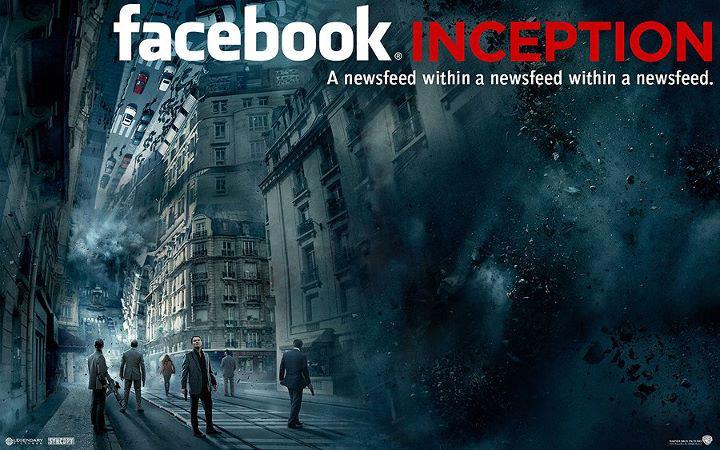
Anger! The keystone to successful social media is emotion. While thousands of would be social media experts flood our networks with useless posts every day, the small group that manages to actually capture our attention are the ones that are unconventional and tap into our emotions.

Facebook did not make its changes slowly, it didn’t even transition people into the new features. Facebook’s policy was a flat out “here you go, deal with it”. This change and introduction captured one of the key emotional states in social media. While others lay claim to Google+ being the big winner having opened their G+ network to everyone in the same week, all the talk or buzz is Facebook!

Opening the Google+ network to everyone should have been an event that created buzz for Google. This G+ buzz should have lasted over the course of at least a few weeks, allowing it to capture articles and feedback from both followers and critiques, but Facebook’s move cut that off cold. G+ might get a mention here and there among the articles, but Zuckenburg has stolen G+’s thunder and managed to evolve his social network in one swoop.

The purpose of this article is not to support or criticize the changes to Facebook, but to highlight the importance of emotion in social media, and how Facebook has used it to trample Googles G+ public launch. How Facebook uses this to their brands advantage is another story. Most politicians claim there’s no such thing as bad PR, only bad PR managers and brand storytellers who fail to capitalize on the spotlight. This would seem to be the case with Social Media, most are better having something being said then nothing at all, then you can direct and capitalize on being talked about in one fashion or another.

Enter Facebook Timeline:

This new feature looks to be the family, tree and life story publication of YOU! No Publisher needed!

Get Timeline NOW! Click Here!

***Your timeline is now live — Developer Release****

****Please note: During the developer release, only other developers will be able to see your new timeline. Everyone else will see your old profile.***

PS: Looks like there’ll be no way to hide who you are ever again!

[youtube=http://www.youtube.com/watch?v=9CYATYjk5N4&feature=player_embedded]

Sources:

  • Facebook Inception Photo
  • Fox News: Facebook Users Outrages over changes
  • Huff Post: Facebook Changes, Users React, And How To Go Back To The Old Site
  • Socialnomics


Share this:

  • Share on LinkedIn (Opens in new window) LinkedIn
  • Share on Facebook (Opens in new window) Facebook
  • Share on Mastodon (Opens in new window) Mastodon
  • Share on Reddit (Opens in new window) Reddit
  • Share on X (Opens in new window) X
  • Share on Bluesky (Opens in new window) Bluesky
  • Share on Pinterest (Opens in new window) Pinterest
  • Email a link to a friend (Opens in new window) Email

Like this:

Like Loading…

Related

Filed Under: Content Marketing, Digital Factics Blog, General, Publishing, Social Media Topics Tagged With: brand, facebook, Mobile & Technology, publishing, Social Brand, Social Media, Visibility

Subscribe to Blog via Email

Enter your email address to subscribe

Join 9,585 other subscribers

Reader Interactions

Comments

  1. Phil Wnuk says

    December 23, 2011 at 10:03 am

    Basil:

    You comment: “Facebook’s recent changes are an example of how important it is to hit the mark, even if it seems contrary to your brand.” Hit what mark….how about FB’s recent changes show you how important it is to hit the mark while in line with their brand. thats the optimum goal and good marketers accomplish that.

    The keystone to successful social media is emotion. Not true. i dont want someone hating or despising my product or campaign.

    phil

    Loading...
    Reply
    • Basil C. Puglisi says

      December 23, 2011 at 11:52 am

      Phil,
      There is an old saying that there is no such thing as bad PR, social media has generally proven that to be true. In most cases strong brands have found that a “negative” comment has lead their “fans” to engage and support the brand. This takes the single negative comment and forces it into a wave of overwhelming support. In the old days one negative or bad “world of mouth” used to be worth 10 good or positive “word of mouth” exchanges.
      “WORLD of Mouth” a term by has made that old stat outdated. When the negative comment hits a Facebook wall it tends to move with little viral activity within that contacts vertical. Meaning that the exposure is limited to the 400 or so contacts they have. Additionally, more then half the visits from that will likely land in a space where the “fans” of brands have posted conflicting comments contrary to the “negative post”. This creates the opportunity to turn negative sentiment into positive experiences, especially if the brand has responded and shown that it cares (in addition to the “fans”.
      Positive out ways the negative in digital media (social media), that negative comment likely caught the attention on a few “fans” and lets say that three “fans” leave positive feedback or comments in a need to defend their choice or product. Those three have now exposed their 400 or so contacts they have meaning that they positive has at least 3 times greater exposure then the negative. Additionally, this was all facilitated by the negative comment that in turn created visibility that would not have existed otherwise.

      Basil

      Loading...
      Reply

Leave a ReplyCancel reply

Primary Sidebar

Subscribe via Email

Join 9,585 other subscribers
iDBasil C. Puglisi on ORCID

How to Learn About AI

The Minds That Bend the Machine by Basil C. Puglisi, MPA. Book promotion exploring artificial intelligence, bias, power, and humanity. Releases November 6, 2026.

Buy the eBook on Amazon

This is an banner ad for the book Governing AI When Capability Exceeds Control
Buy the book Digital Factics on Amazon

Advanced Site Search

Responsible AI (#AIgenerated by Agents)

NIST’s Agent Identity Tenets Warn That Human Review Can Turn Into Habit #AIg

NIST’s ten design tenets for agent identity management put most controls in infrastructure and send risky actions to human review. Tenet 05 warns that frequent escalation can turn approval into habit, and leaves who rules, and what record that ruling leaves, to each organization.

India’s Telecom Regulator Would Require a Designated Officer’s Approval Before Any AI System Is Used #AIg

TRAI’s draft guidelines on responsible AI in telecom would require a designated officer to approve every AI system before use and make operators accountable for vendor-built AI. They say less about who rules on outputs once a system is running. Comments are due November 27.

Only a Quarter of UK Workers Always Verify AI Answers. Who Decides Which Ones Count? #AIg

O’Reilly found that only 24% of UK employees always verify AI-generated answers, and 39% of those using them have acted on one that proved wrong. Perceptyx and RGP point to the missing piece: deciding which AI outputs need a named person’s ruling.

New AI Certificates for Doctors and Teachers Teach Checking. Do They Certify It? #AIg

Google launched an AI certificate for healthcare professionals that takes under five hours and carries up to 5.0 CME credits, and Scale and UMSL launched a 12-hour microcredential for teachers. Both teach evaluation of AI output. A European teacher framework asks for evidence of it, and employers can too.

OpenAI Built Four Layers to Watch Its Agents. Human Paging Mostly Keeps Business Hours #AIg

OpenAI’s October 29 post describes up to four automated layers that watch its agents, then discloses that human paging runs at any hour only for highest-priority alerts on frontier training runs, during business hours for most other traffic, and is currently off for internal Codex. For enterprise deployments, alerts go to the customer’s own webhook, and on our reading so does the decision.

House Democrats Ask AI Labs for Incident Reports Within 48 Hours of Discovery #AIg

Letters dated October 27 ask five frontier AI companies for a full accounting of misalignment incidents by November 11 and notice within 48 hours of discovery. None of the fourteen requested items asks who inside a company decides a flagged event is an incident, and that decision is what starts the clock.

A New Jersey Bill Takes Reasonable Care Off the Table for Chatbot Injuries #AIg

New Jersey’s A5607, reported out of committee on October 19, would make a chatbot a product and hold its provider liable for any injury to a user from its use, even after all reasonable care. The monthly harm assessment it requires still needs a named person to decide what the numbers mean.

More Posts from this Category

#SMAC #SocialMediaWeek

Basil Social Media Week

Legacy Print:

Digital Factics: Twitter

© 2009–2026 Basil C. Puglisi, Creator of Factics™ and the HAIA Ecosystem

%d