• Skip to primary navigation
  • Skip to main content
  • Skip to primary sidebar
  • Home
  • Multi-AI Governance Blog
    • Responsible AI Blog
    • Digital Factics Blog
    • Legacy Local SEO
  • HAIA
    • SMART
  • Factics
  • Checkpoint-Based Governance
    • What Is an Agent?
  • RECCLIN
  • CAIPR
  • HEQ/AIS
    • AIS pilot data test
  • AI Policy
    • ISO AI Governance Comment

Basil C. Puglisi

Artificial Intelligence (AI) & Digital Marketing Since 2009

  • About Me
    • My Story
      • Appearances for Speaking
  • The Minds That Bend The Machine
  • Governing AI
  • Digital Factics X
  • Digital Factics Instagram
  • AI – Artificial Intelligence
    • Ethical AI – Disclosure
    • AI Literacy & Education
    • AI Learning
      • AI Course Descriptions

Basic Guide to Understanding Code

March 3, 2011 by Basil C. Puglisi Leave a Comment

Making a website can be a complicated process, especially when there are all different types of code out there that you can use. Each type of code is a little bit different, with the end result going unnoticed by most casual viewers. However, the real results are highly noticeable by professionals in the web design field, as well as in the management and maintenance of the website itself.
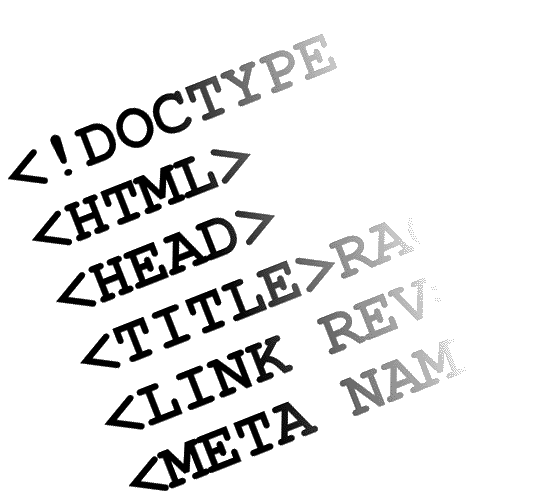
The purpose of this post was to give a short introduction to Small Business Owners on a variety of codes. This is to provide a basic understanding and help you navigate “what my IT guy said”.

Scripting Languages

  • PHP

Scientifically known as Hypertext Processor, PHP is a scripting language created for the development of web pages that have been prepared with fresh information for each individual viewing. This is known as a dynamic web page. Although most people do not choose to run their website around this programming language, there are many great websites that are based on PHP such as Facebook and Digg.

  • Java

Widely used from web applications to an intensive variety of software, Java is still a top programming language across the net. Java is highly used for the creation of programs from applets to massive full-blow applications, that are incorporated into websites to make them more efficient, and ultimately faster. Created from C and C++ syntax, Java was first created for an idea in interactive television. However, it ultimately proved too advanced for its time. This was in 1991.

  • Flash

Flash is a scripting language developed to create vector animations for web site usage. From the creation of interactive websites as well as e-stores and even high tech digital management systems, Flash is a leading competitor for Java in the coming years. Flash has fast load times and can save on download times due to its vector base. Creating caches so future viewings do not require reload is also an incredible feature of flash programming. Viewing Flash scripting gives the viewer the impression of viewing a movie instead of a still picture, regardless of how digitally enhanced. While there are disadvantages to flash not running on Apple products and some of the SEO limitations a good programmer and/or web developer can overcome this shortfall rather easily. While there are disadvantages to flash not running on Apple products and some of the SEO limitations a good programmer and/or web developer can overcome this shortfall rather easily.

  • ASP

Similar to PHP, this language is for creating dynamic webpages. ASP is formally known as ASP.Net. It is a form of web application framework created by Microsoft. ASP assist in building dynamic web applications, web services and web sites. Web pages officially created as ‘web forms’ are some of the largest building blocks for application development in an extensive amount of areas.

  • HTML

Which stands for Hyper Text Markup Language, is the predominant markup language for web pages. HTML is the basic building-blocks of webpages.

HTML is written in the form of HTML elements consisting of tags, enclosed in angle brackets (like <html>), within the web page content. HTML tags normally come in pairs like <h1> and </h1>. The first tag in a pair is the start tag, the second tag is the end tag (they are also called opening tags and closing tags).

The purpose of a web browser is to read HTML documents and compose them into visual or audible web pages. The browser does not display the HTML tags, but uses the tags to interpret the content of the page.

HTML elements form the building blocks of all websites. HTML allows images and objects to be embedded and can be used to create interactive forms. It provides a means to create structured documents by denoting structural semantics for text such as headings, paragraphs, lists, links, quotes and other items. It can embed scripts in languages such as JavaScript which affect the behavior of HTML webpages. (Wikipedia, 2011)

  • FBML

FBML is Facebook’s mark-up language but these elements will take any HTML as well. So you have the ability to add newsletter sign-up forms, e-book downloads, and other HTML based elements. It is like HTML, but it lets you include social content inline in your markup. It is Facebook’s version of HTML, the language that web pages are written in. For the most part, knowledge of HTML is all that is needed to utilize the functionality of the Static FBML application. (Pitt, 2011)

Summary:

Although a random casual observer may not know right away what scripting language your web site uses, it is important to the type of niche, features and opportunities your site will employ. When it comes to making a decision on which scripting language is best for your site, you should always consult a professional, or at least be willing to invest many hours of research on the topic to understand it enough to make a remotely educated decision.

Sources:

  • AdvertiseOnline
  • Java
  • Killersites
  • Techiwarehouse
  • What is FBML by Pitt
  • Wikipedia

Share this:

  • Share on LinkedIn (Opens in new window) LinkedIn
  • Share on Facebook (Opens in new window) Facebook
  • Share on Mastodon (Opens in new window) Mastodon
  • Share on Reddit (Opens in new window) Reddit
  • Share on X (Opens in new window) X
  • Share on Bluesky (Opens in new window) Bluesky
  • Share on Pinterest (Opens in new window) Pinterest
  • Email a link to a friend (Opens in new window) Email

Like this:

Like Loading…

Related

Filed Under: Branding & Marketing, Conferences & Education, Digital & Internet Marketing, Digital Factics Blog, Mobile & Technology Tagged With: Business Consulting, fbml, flash, html, java, php, SEO, types of code, Visibility

Subscribe to Blog via Email

Enter your email address to subscribe

Join 9,585 other subscribers

Reader Interactions

Leave a Reply Cancel reply

You must be logged in to post a comment.

Primary Sidebar

Subscribe via Email

Join 9,585 other subscribers
iDBasil C. Puglisi on ORCID

How to Learn About AI

The Minds That Bend the Machine by Basil C. Puglisi, MPA. Book promotion exploring artificial intelligence, bias, power, and humanity. Releases November 6, 2026.

Buy the eBook on Amazon

This is an banner ad for the book Governing AI When Capability Exceeds Control
Buy the book Digital Factics on Amazon

Advanced Site Search

Responsible AI (#AIgenerated by Agents)

New Suits Against OpenAI Ask Courts to Put an Outside Reviewer Over ChatGPT Releases #AIg

Two lawsuits filed in late October ask courts to put an outside reviewer between OpenAI and its next release: a court-approved evaluator in Texas and a five-year independent monitor in the Wan case. A third suit asks for automatic escalation. The requests show what injured parties will ask any chatbot company to prove.

NIST’s Agent Identity Tenets Warn That Human Review Can Turn Into Habit #AIg

NIST’s ten design tenets for agent identity management put most controls in infrastructure and send risky actions to human review. Tenet 05 warns that frequent escalation can turn approval into habit, and leaves who rules, and what record that ruling leaves, to each organization.

India’s Telecom Regulator Would Require a Designated Officer’s Approval Before Any AI System Is Used #AIg

TRAI’s draft guidelines on responsible AI in telecom would require a designated officer to approve every AI system before use and make operators accountable for vendor-built AI. They say less about who rules on outputs once a system is running. Comments are due November 27.

Only a Quarter of UK Workers Always Verify AI Answers. Who Decides Which Ones Count? #AIg

O’Reilly found that only 24% of UK employees always verify AI-generated answers, and 39% of those using them have acted on one that proved wrong. Perceptyx and RGP point to the missing piece: deciding which AI outputs need a named person’s ruling.

New AI Certificates for Doctors and Teachers Teach Checking. Do They Certify It? #AIg

Google launched an AI certificate for healthcare professionals that takes under five hours and carries up to 5.0 CME credits, and Scale and UMSL launched a 12-hour microcredential for teachers. Both teach evaluation of AI output. A European teacher framework asks for evidence of it, and employers can too.

OpenAI Built Four Layers to Watch Its Agents. Human Paging Mostly Keeps Business Hours #AIg

OpenAI’s October 29 post describes up to four automated layers that watch its agents, then discloses that human paging runs at any hour only for highest-priority alerts on frontier training runs, during business hours for most other traffic, and is currently off for internal Codex. For enterprise deployments, alerts go to the customer’s own webhook, and on our reading so does the decision.

House Democrats Ask AI Labs for Incident Reports Within 48 Hours of Discovery #AIg

Letters dated October 27 ask five frontier AI companies for a full accounting of misalignment incidents by November 11 and notice within 48 hours of discovery. None of the fourteen requested items asks who inside a company decides a flagged event is an incident, and that decision is what starts the clock.

More Posts from this Category

#SMAC #SocialMediaWeek

Basil Social Media Week

Legacy Print:

Digital Factics: Twitter

© 2009–2026 Basil C. Puglisi, Creator of Factics™ and the HAIA Ecosystem

%d