Making a website can be a complicated process, especially when there are all different types of code out there that you can use. Each type of code is a little bit different, with the end result going unnoticed by most casual viewers. However, the real results are highly noticeable by professionals in the web design field, as well as in the management and maintenance of the website itself.
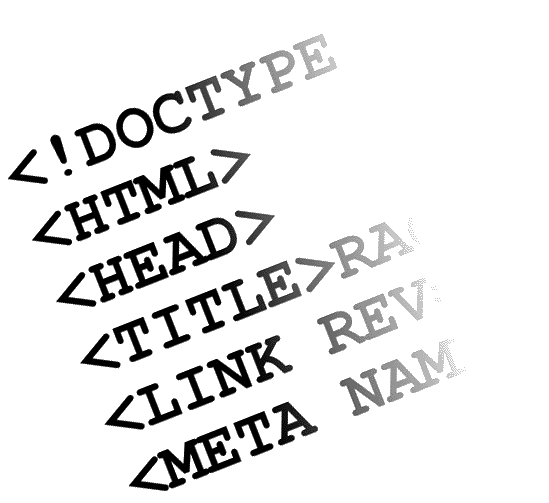
The purpose of this post was to give a short introduction to Small Business Owners on a variety of codes. This is to provide a basic understanding and help you navigate “what my IT guy said”.
Scripting Languages
- PHP
Scientifically known as Hypertext Processor, PHP is a scripting language created for the development of web pages that have been prepared with fresh information for each individual viewing. This is known as a dynamic web page. Although most people do not choose to run their website around this programming language, there are many great websites that are based on PHP such as Facebook and Digg.
- Java
Widely used from web applications to an intensive variety of software, Java is still a top programming language across the net. Java is highly used for the creation of programs from applets to massive full-blow applications, that are incorporated into websites to make them more efficient, and ultimately faster. Created from C and C++ syntax, Java was first created for an idea in interactive television. However, it ultimately proved too advanced for its time. This was in 1991.
- Flash
Flash is a scripting language developed to create vector animations for web site usage. From the creation of interactive websites as well as e-stores and even high tech digital management systems, Flash is a leading competitor for Java in the coming years. Flash has fast load times and can save on download times due to its vector base. Creating caches so future viewings do not require reload is also an incredible feature of flash programming. Viewing Flash scripting gives the viewer the impression of viewing a movie instead of a still picture, regardless of how digitally enhanced. While there are disadvantages to flash not running on Apple products and some of the SEO limitations a good programmer and/or web developer can overcome this shortfall rather easily. While there are disadvantages to flash not running on Apple products and some of the SEO limitations a good programmer and/or web developer can overcome this shortfall rather easily.
- ASP
Similar to PHP, this language is for creating dynamic webpages. ASP is formally known as ASP.Net. It is a form of web application framework created by Microsoft. ASP assist in building dynamic web applications, web services and web sites. Web pages officially created as ‘web forms’ are some of the largest building blocks for application development in an extensive amount of areas.
- HTML
Which stands for Hyper Text Markup Language, is the predominant markup language for web pages. HTML is the basic building-blocks of webpages.
HTML is written in the form of HTML elements consisting of tags, enclosed in angle brackets (like <html>), within the web page content. HTML tags normally come in pairs like <h1> and </h1>. The first tag in a pair is the start tag, the second tag is the end tag (they are also called opening tags and closing tags).
The purpose of a web browser is to read HTML documents and compose them into visual or audible web pages. The browser does not display the HTML tags, but uses the tags to interpret the content of the page.
HTML elements form the building blocks of all websites. HTML allows images and objects to be embedded and can be used to create interactive forms. It provides a means to create structured documents by denoting structural semantics for text such as headings, paragraphs, lists, links, quotes and other items. It can embed scripts in languages such as JavaScript which affect the behavior of HTML webpages. (Wikipedia, 2011)
- FBML
FBML is Facebook’s mark-up language but these elements will take any HTML as well. So you have the ability to add newsletter sign-up forms, e-book downloads, and other HTML based elements. It is like HTML, but it lets you include social content inline in your markup. It is Facebook’s version of HTML, the language that web pages are written in. For the most part, knowledge of HTML is all that is needed to utilize the functionality of the Static FBML application. (Pitt, 2011)
Summary:
Although a random casual observer may not know right away what scripting language your web site uses, it is important to the type of niche, features and opportunities your site will employ. When it comes to making a decision on which scripting language is best for your site, you should always consult a professional, or at least be willing to invest many hours of research on the topic to understand it enough to make a remotely educated decision.

Sources:
Leave a Reply